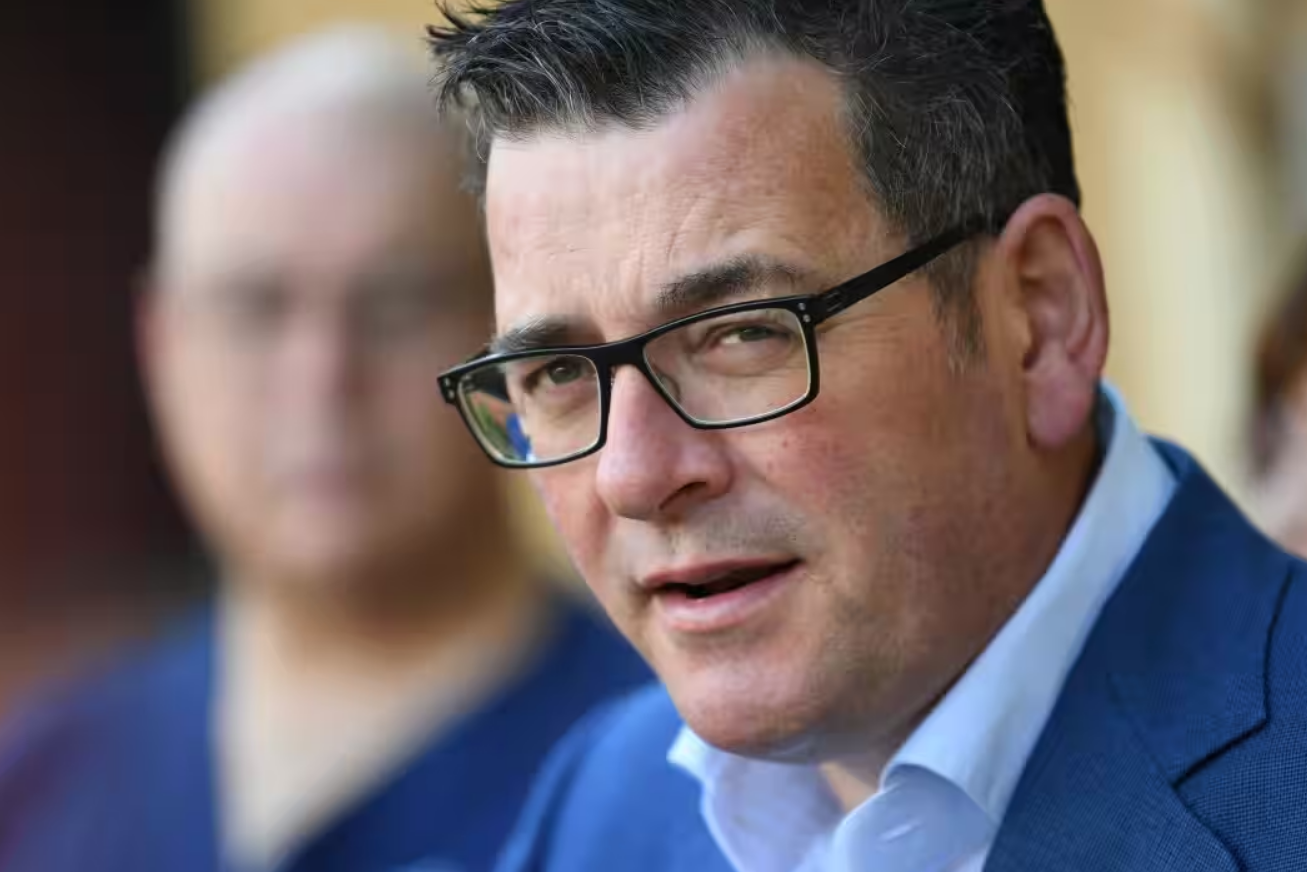
Daniel Andrews is one of the most influential Australian politicians of the twenty-first century. Best known for serving as the Premier of Victoria from 2014 to 2023, Andrews led Australia’s second-most populous state through a period of significant infrastructure expansion, economic reform, social policy changes, and the unprecedented challenges of the COVID-19 pandemic. Throughout his career, he became known for his disciplined leadership, strong commitment to public investment, and willingness to make politically difficult decisions. While widely respected by supporters and strongly criticized by opponents, Andrews remains one of the most consequential figures in modern Australian state politics.
Daniel Michael Andrews was born on July 6, 1972, in Williamstown, a suburb of Melbourne, Victoria, Australia. He grew up in Melbourne’s southeastern suburbs and attended local public schools before studying politics and classics at Monash University. Although he did not complete his university degree, his interest in politics developed early, leading him to become actively involved in the Australian Labor Party while still a young adult.
Unlike many politicians who first built careers in business or law, Andrews entered politics at an early stage of his professional life. He worked as a political staff member and adviser within the Victorian Labor Party, gaining practical experience in public administration, electoral strategy, and legislative processes. These formative years allowed him to understand how government functions while developing strong organizational and leadership skills.
In 2002, Andrews was elected to the Victorian Legislative Assembly as the Member for Mulgrave, a suburban electorate in Melbourne’s southeast. His election coincided with a period when the Labor Party was governing Victoria under Premier Steve Bracks. As a new parliamentarian, Andrews quickly established himself as a hardworking representative focused on education, local infrastructure, healthcare, and community development.
During his early years in Parliament, Andrews served in several ministerial positions. Among his most significant responsibilities was serving as Minister for Health, where he oversaw aspects of Victoria’s healthcare system, hospital management, and public health policy. He also held portfolios related to gaming, consumer affairs, and multicultural issues, gaining broad administrative experience across multiple areas of government.
After the Labor Party lost government in 2010, Andrews was elected Leader of the Victorian Labor Party and became Leader of the Opposition. Taking leadership during a difficult political period, he focused on rebuilding the party’s public image while developing policies centered on infrastructure investment, healthcare improvement, education funding, job creation, and economic growth.
One of Andrews’ greatest political strengths was his disciplined approach to opposition. Rather than relying primarily on criticism of the government, he concentrated on presenting detailed alternative policy proposals. This strategy gradually increased Labor’s public support and positioned the party as a credible alternative government ahead of the 2014 state election.
The 2014 Victorian state election marked a turning point in Andrews’ political career. Leading the Labor Party, he secured victory and became the 48th Premier of Victoria. His election signaled a shift in state politics and began nearly nine years of Labor government under his leadership.
From the beginning of his premiership, Andrews placed significant emphasis on infrastructure development. His government launched one of the largest public infrastructure investment programs in Victoria’s history, funding major road upgrades, railway improvements, new metro tunnels, level crossing removals, hospitals, schools, and public transport projects. Supporters argued these investments would strengthen Victoria’s long-term economic competitiveness while improving daily life for millions of residents.
Among the government’s most notable infrastructure initiatives was the Level Crossing Removal Project, designed to eliminate dangerous intersections between roads and railway lines across Melbourne. The project aimed to improve traffic flow, increase rail reliability, and enhance public safety. It became one of the largest transport programs undertaken by any Australian state government.
Public transportation remained another defining feature of Andrews’ administration. His government invested heavily in railway modernization, suburban rail extensions, tram networks, and the construction of the Metro Tunnel, one of Australia’s largest public transport infrastructure projects. These investments reflected his belief that growing cities require efficient, sustainable transportation systems.
Healthcare also received significant attention throughout Andrews’ premiership. His government expanded hospitals, funded new healthcare facilities, recruited additional medical staff, and invested in regional health services. These initiatives sought to improve access to medical care across both metropolitan Melbourne and regional Victoria.
Education represented another major policy priority. Andrews’ government funded the construction of new schools, modernized existing educational facilities, expanded vocational training opportunities, and increased investment in early childhood education. He consistently argued that education serves as one of the most important long-term investments any government can make.
Housing affordability became an increasingly important issue during Andrews’ time as Premier. Rapid population growth placed significant pressure on Melbourne’s housing market, leading the government to introduce planning reforms and support additional residential construction. While housing affordability remained a challenging issue, Andrews emphasized increasing housing supply through both public and private sector initiatives.
Climate policy also became an important element of his administration. Victoria expanded renewable energy generation, introduced emissions reduction targets, promoted clean technology investment, and encouraged energy efficiency. Andrews frequently argued that economic development and environmental sustainability could progress together through technological innovation and long-term planning.
The defining challenge of Andrews’ premiership emerged in 2020 with the outbreak of the COVID-19 pandemic. Victoria experienced some of Australia’s largest coronavirus outbreaks, particularly in metropolitan Melbourne. In response, the Andrews government implemented strict public health measures including lockdowns, mask mandates, border controls, business restrictions, and vaccination campaigns.
These measures generated intense national debate. Supporters argued that strong restrictions protected public health, prevented greater loss of life, and helped preserve healthcare capacity during an unprecedented global emergency. Critics contended that extended lockdowns imposed significant economic, social, and psychological costs on businesses and residents. Regardless of political opinion, Andrews became one of the most recognizable Australian leaders during the pandemic.
Throughout the pandemic, Andrews held frequent televised press conferences explaining public health decisions and providing updates on infection rates, hospital capacity, vaccination efforts, and government support programs. His highly visible leadership style made him both one of Australia’s most supported and most criticized political figures during this period.
Beyond the pandemic, Andrews’ government introduced numerous social reforms. These included initiatives supporting gender equality, domestic violence prevention, mental health services, multicultural inclusion, Indigenous partnerships, and LGBTQ+ equality. His administration emphasized expanding access to public services while promoting inclusion across Victorian society.
Economic recovery became a central focus following the pandemic. Andrews’ government supported business recovery, workforce development, tourism promotion, and major construction projects intended to stimulate employment and investment. Infrastructure spending continued to play an important role in these recovery efforts.
Personally, Andrews is often described as disciplined, determined, and highly organized. Colleagues frequently note his careful preparation, attention to detail, and strong understanding of government administration. Although his communication style is generally direct and formal, supporters often praise his decisiveness during periods of crisis.
Outside politics, Andrews has spoken publicly about the importance of family life and community involvement. He is married to Catherine Andrews, and together they have children. Throughout his premiership, he occasionally shared personal experiences while generally maintaining a relatively private family life.
In 2021, Andrews suffered serious injuries after falling while on holiday, resulting in multiple fractured ribs and spinal injuries. Following several months of rehabilitation, he returned to office and resumed his duties as Premier, demonstrating resilience during a difficult personal period.
In 2022, Andrews led the Labor Party to another decisive election victory, securing a third consecutive term as Premier. The result reflected continued public support for many of his government’s policies despite ongoing political debate surrounding the pandemic and infrastructure spending.
In September 2023, Andrews unexpectedly announced his resignation as Premier and from Parliament, bringing an end to nearly two decades in the Victorian Parliament and almost nine years as head of government. His departure marked the conclusion of one of the longest and most influential premierships in modern Victorian history.
Daniel Andrews’ legacy continues to generate considerable discussion among political observers. Supporters point to his achievements in infrastructure, healthcare, education, renewable energy, and economic development. Critics focus on the length and severity of COVID-19 restrictions, public debt associated with infrastructure investment, and aspects of government decision-making. Regardless of differing political perspectives, Andrews’ influence on Victoria’s development is widely acknowledged.
Today, Daniel Andrews is regarded as one of the defining figures in contemporary Australian state politics. His leadership transformed Victoria through large-scale infrastructure investment, significant public sector reform, and decisive crisis management during one of the most challenging periods in recent history. His premiership continues to shape political debate regarding government leadership, public investment, healthcare, and the balance between economic growth and social responsibility in Australia.