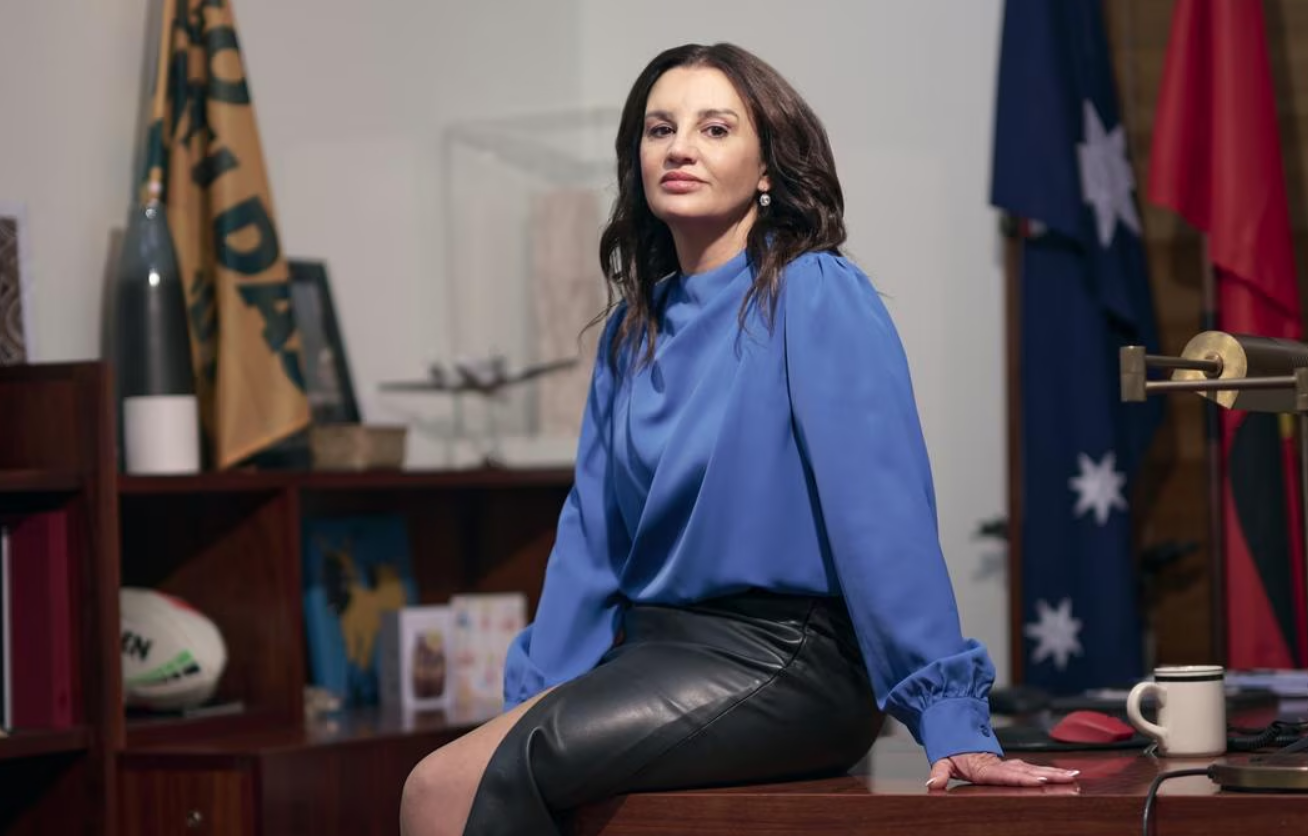
Jacqui Lambie is an Australian politician, former soldier, and independent senator who has become one of the most distinctive voices in the Australian Parliament. Known for her direct communication style, advocacy for military veterans, support for regional communities, and willingness to challenge both major political parties, Lambie has built a reputation as an independent-minded leader who prioritizes practical solutions over partisan politics. Throughout her public career, she has consistently emphasized issues affecting ordinary Australians, particularly those living outside major cities and those who have served in the Australian Defence Force.
Jacqueline Louise Lambie was born on February 26, 1971, in Devonport, Tasmania, Australia. Raised in northern Tasmania, Lambie experienced many of the economic and social realities faced by families living in regional Australia. Her upbringing instilled a strong sense of resilience, independence, and determination, qualities that would later define both her military and political careers.
Unlike many politicians who followed traditional academic or professional paths into public office, Lambie entered the workforce at a young age. She has often spoken publicly about the financial challenges she faced while growing up and the importance of hard work in achieving personal success. These early life experiences shaped her political philosophy and contributed to her emphasis on supporting working Australians and disadvantaged communities.
At the age of eighteen, Lambie joined the Australian Army. Military service became one of the defining experiences of her life and remains central to her political identity. During her time in the Army, she served in the Royal Australian Corps of Transport and gained valuable experience working within one of Australia’s most important national institutions.
Military life required discipline, teamwork, adaptability, and leadership. Lambie has frequently credited her Army service with teaching her resilience and preparing her for many of the challenges she would later encounter in public life. She has often described the military as providing opportunities for personal growth while also exposing her to the realities faced by service personnel and their families.
Unfortunately, Lambie’s military career was cut short after she suffered a serious back injury during training. The injury forced her to leave the Australian Defence Force earlier than planned and significantly affected her long-term health. Following her discharge, she experienced considerable financial and personal difficulties while navigating Australia’s veterans’ support systems.
These experiences profoundly influenced Lambie’s later political priorities. Having personally encountered challenges related to veterans’ healthcare, disability support, and government bureaucracy, she became a passionate advocate for former members of the Australian Defence Force. Throughout her political career, improving services for veterans has remained one of her highest priorities.
Before entering politics, Lambie worked in several different occupations while raising her family. She has often spoken openly about periods of financial hardship, including times when she relied on government assistance. Rather than viewing these experiences negatively, Lambie argues that they gave her firsthand understanding of the challenges faced by many Australians living on modest incomes.
Lambie first entered national politics during the 2013 Australian federal election. She was elected to the Australian Senate representing Tasmania as a candidate for the Palmer United Party (PUP), a newly established political party led by businessman Clive Palmer. Her election surprised many political observers and marked the beginning of a highly visible parliamentary career.
Shortly after entering Parliament, Lambie developed a reputation for her outspoken style and willingness to express independent opinions. Although initially elected under the Palmer United Party banner, disagreements with party leadership soon emerged. In 2014, Lambie left the party and continued serving as an independent senator.
Her departure from the Palmer United Party allowed her greater freedom to advocate policies reflecting her own priorities. Rather than aligning consistently with either major political party, Lambie began evaluating legislation individually, often negotiating directly with governments on specific issues before deciding how to vote.
One of Lambie’s defining political characteristics has been her strong advocacy for military veterans. She has consistently argued that Australia has a moral obligation to provide high-quality healthcare, mental health services, financial support, and employment assistance for former service personnel. Her speeches frequently draw upon her own military experiences, giving additional credibility to her advocacy.
Mental health among veterans has been another major focus of Lambie’s work. She has repeatedly highlighted concerns regarding post-traumatic stress disorder (PTSD), suicide prevention, rehabilitation services, and access to timely medical treatment. Her efforts have contributed to increased public awareness of these important issues.
Regional Tasmania has remained at the center of Lambie’s political agenda throughout her parliamentary career. She frequently campaigns for improved healthcare, employment opportunities, education, transport infrastructure, and economic development across Tasmania’s regional communities. She argues that national policy should better recognize the unique needs of rural and regional Australia.
Healthcare more broadly has also become one of Lambie’s principal policy interests. She has supported strengthening Medicare, expanding regional hospital services, improving access to specialists, and increasing investment in aged care. Her focus often centers on ensuring that Australians living outside major cities receive healthcare services comparable to those available in metropolitan areas.
Economic fairness represents another important aspect of Lambie’s political philosophy. She has frequently argued that government policy should prioritize workers, pensioners, veterans, and low-income households. While supporting responsible economic management, she often emphasizes the importance of balancing fiscal discipline with social responsibility.
Lambie has also expressed strong interest in government transparency and accountability. Throughout her Senate career, she has advocated greater scrutiny of public spending, clearer government decision-making, and stronger oversight of public institutions. Her willingness to question governments of different political parties has reinforced her reputation for independence.
In 2017, Lambie temporarily left the Senate following the High Court’s interpretation of constitutional rules relating to dual citizenship. Like several other Australian parliamentarians during that period, questions arose regarding her eligibility because of inherited foreign citizenship. After resolving the issue, she successfully returned to federal politics.
In 2019, Lambie was re-elected to the Senate, this time representing the Jacqui Lambie Network, a political party established around her independent political platform. The party focused on veterans’ affairs, regional development, healthcare, government accountability, and practical economic reform. Her return demonstrated continued public support among Tasmanian voters.
As leader of the Jacqui Lambie Network, she has frequently held the balance of power in the Senate during closely contested legislative debates. This position has allowed her to negotiate amendments to legislation and secure commitments from governments before supporting or opposing major bills. Her role illustrates the significant influence that independent senators can exercise within Australia’s parliamentary system.
One feature that distinguishes Lambie from many other politicians is her communication style. She is known for speaking directly, using plain language rather than technical political terminology. Supporters often describe her as authentic, approachable, and relatable, while critics sometimes view her style as unconventional or confrontational. Regardless of differing opinions, her communication has made her one of Australia’s most recognizable senators.
Outside politics, Lambie has frequently discussed the importance of family, resilience, and personal responsibility. She has openly shared aspects of her own life experiences, including health challenges, financial hardship, and single parenthood. Many supporters believe this openness contributes to her credibility and strengthens her connection with ordinary Australians.
Throughout her parliamentary career, Lambie has demonstrated a willingness to work with politicians from across the political spectrum when agreements align with her policy priorities. Rather than maintaining rigid ideological positions, she generally evaluates proposals based on their likely impact on veterans, regional communities, workers, and low-income Australians.
Lambie’s political influence extends beyond the size of her parliamentary party. Her advocacy has shaped national discussions regarding veterans’ welfare, regional inequality, healthcare accessibility, government accountability, and Senate negotiations. Political analysts frequently note that her independent position allows her to influence legislation in ways that larger opposition parties sometimes cannot.
Today, Jacqui Lambie remains one of Australia’s most distinctive and influential independent political leaders. From her early years in the Australian Army to her role as a senator representing Tasmania, she has consistently focused on practical issues affecting veterans, regional communities, and working Australians. Her combination of military experience, personal resilience, and independent political leadership has earned her a unique place in Australian politics. Whether negotiating legislation in the Senate or advocating for veterans’ rights, Lambie continues to play an important role in shaping national policy while remaining committed to representing the interests of the communities she serves.